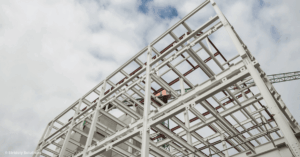
Detailing plays a very critical part in how a pre-engineered building comes to life. It is the stage where every idea and calculation turns into a clear set of building components. Each part must connect exactly as it should, and any mistake at this point can cause delays later at the fabrication shop or onsite during erection. Even with its importance, this step often slows down the entire journey of a PEB project. Many teams struggle to move forward on schedule simply because detailing takes longer than expected.
What is PEB Detailing?
PEB detailing is where the structure becomes fully defined and ready to move toward fabrication. Every column, rafter, girt, purlin, and connection gets a clear identity at this stage. The goal is to make sure that when steel parts arrive at the shop or the site, there is no confusion about what to produce or how to assemble it
PEB structures are often designed to be fast to install and cost-efficient. That only works if the detailing captures every possible fit, tolerance, and load path in the model. It is more than adding dimensions. It brings together engineering intent, manufacturing logic, and site practicality
What detailing usually covers
- Placement and geometry of all steel members
- Exact material grades along with thickness or profiles
- Connection design that considers loads and ease of erection
- Roof and wall panel layouts that match architectural needs
- Bracing and stability requirements
- Clear fabrication notes that avoid rework or interpretation
- Sequencing information that helps at the site
Warehouses, factories, commercial spaces, and showrooms all fall under PEB applications, yet no two projects behave the same way. Crane loads, mezzanines, openings, and accessories can change how members are detailed. Good detailing takes these variations seriously, so the final building stands strong, and the construction flow does not get slowed down by surprises
Why Detailing Becomes a Bottleneck in PEB Projects
Detailing is one of the busiest stages in any PEB project, and it often slows down the entire schedule. Every piece must fit, and every joint must transfer loads correctly. The amount of coordination and precision needed is far greater than what most people see from the outside
Complexity and Strict Precision
Small errors in detailing can turn into major issues during fabrication or on the site. A bolt hole that is off by a few millimeters or a missing stiffener can stop an entire erection sequence. Every building is different, and detailing teams spend a lot of effort adapting the design to match the exact project needs. That takes time and full focus
Heavy Coordination Requirements
Detailing pulls information from architects, structural engineers, MEP teams, and sometimes even equipment suppliers. Misalignment between these inputs can lead to clashes later. The detailing team usually becomes the center point for communication, and this coordination takes effort. When communication breaks even slightly, the workflow gets delayed
High Dependency on Skilled Professionals
PEB detailing is not something anyone can pick up quickly. It needs a strong structural understanding along with deep knowledge of fabrication practices and site conditions. Skilled detailers are always in demand. When the team is small or stretched across projects, timelines get pushed back.
Learn More – A Complete Guide to Structural Steel Detailing using Tekla Structures
Additional Tools
Advanced detailing software is necessary to handle complex steel geometry and connections. However, these tools require investment along with continuous training. Adopting new technology or changing workflows is not always smooth, and this sometimes slows the output
Quality review and compliance
Every drawing and model output goes through checks to ensure accuracy. It also needs to match project standards and safety regulations. Multiple review rounds and revisions are common, which means more hours are added to the schedule
All these factors build pressure on the detailing stage. When detailing lags, fabrication waits, and construction activities get held up, too. It is the link that holds every next step together, which is why PEB detailing is often seen as a bottleneck in the flow of a project.
The Impact of Detailing Bottlenecks in PEB Projects
Delays in detailing create a direct setback for the project lifecycle. PEB structures rely heavily on accurate drawings for fabrication and erection planning, so any slowdown here affects every team down the line
Project Timelines
Fabricators cannot begin production without approved drawings. When detailing takes longer than expected, materials stay idle, and erection schedules get pushed. Even a small shift here may lead to major adjustments later, once cranes, labor, and logistics are already planned.
Higher Costs
Rework during fabrication or field modification at the site increases cost quickly. These are avoidable expenses, but they become unavoidable if detailing errors appear late. Holding resources while waiting for drawings also adds to the financial impact.
Quality and Safety Concerns
Once parts reach the site, any misfit becomes a physical problem. Improper alignment or a wrong hole location can create installation challenges, and in some situations also compromise load performance. Fixing these issues on-site often introduces risks that were never part of the design intent.
The detailing phase carries a lot of responsibility because it influences the outcome of fabrication accuracy, installation speed, and the trust teams have in the design. When bottlenecks occur, the full project delivery feels the effect.
How Tekla Structures helps teams overcome PEB detailing challenges
Model Accuracy for Complex PEB Conditions
Tekla gives detailers a full view of how the PEB behaves in real life. Complex items like cranes, mezzanine joints, and bracing layouts are included early, which helps avoid clashes that become expensive later.
- Full visibility of portal frames, rafters, and tie members inside one coordinated model
- Early detection of crane beam conflicts or sheeting support misalignment
- More accurate weight and load checks make erection planning smoother.
Connection Design Aligned with Fabrication Standards
Connections are one of the biggest reasons for delays in PEB projects. Tekla helps create connections that follow the fabricator practice so less confusion on the shop floor.
- Automated connection tools reduce repeated work.
- Plates, holes, and welds are modeled with precision.
- Shop teams do not guess or modify work on the fly
Reliable Shop Outputs and Material Data
Since all information comes from the model, the documentation is clear. Fabricators get exactly what they must produce, which improves flow on the cutting and welding line
- Assembly drawings with correct orientation and mark numbers
- CNC and material files for better automation
- Accurate bolt lists and field assembly instructions
Controlled Revision and Update Management
Changes in design are common. Tekla keeps that under control without slowing the project even when updates come late
- One update in the model reflects all related drawings
- Less manual correction work and a lower risk of new mistakes
- Faster turnaround when engineering input changes mid-progress
Integrated Collaboration Across Stakeholders
PEB detailing depends on coordination with architects and engineers. Tekla gives teams a shared model to review, so problems do not wait until the steel arrives on-site
- Exposing clashes between structure and services early
- Helping engineers validate load paths visually
- Giving everyone one trusted version of the project
Model-Based Planning for Safe and Efficient Erection
Erection teams understand the real picture of the structure well before stepping on the site. They can plan the sequence and access in advance
- Placement of temporary bracing gets planned early
- Heavy lifting and crane access become predictable
- Fewer surprises during structural alignment
Business Scenario
A leading building manufacturer in North America was struggling with outdated 2D systems that produced models with limited depth and accuracy. Revisions took too much effort, collaboration was fragmented, and the overall process slowed projects while adding unnecessary costs.
Stridely Solutions – Trimble Tekla partner modernized their workflows by implementing Tekla Structures with Tekla Open API integration. We built custom plugins, automated drafting tasks, and migrated their IT setup to the cloud, which allowed detailers to edit models directly in Tekla, generate accurate reports and shop drawings faster, and collaborate with engineers and fabricators on a single connected platform.
This transformation reduced project lead times, cutting down manual work, and gave the client greater flexibility to manage revisions and meet customer demands. It also positioned them for future integration with advanced digital tools, strengthening their competitiveness in the pre-engineered building market.
Read the full success story here – Revolutionizing Construction Modeling and Detailing with Tekla Structures
Conclusion
PEB detailing decides how confidently a project moves into fabrication and erection. Any slowdown or inaccuracy at this step soon becomes a delay at the shop or a struggle on site. Contractors and fabricators feel the impact very quickly because steel installation depends on the quality of drawings delivered by the detailing team.
Tekla Structures gives detailers a stronger way to control quality inside the model. It helps detect clashes earlier and creates fabrication data without guesswork. The coordination with engineers and architects improves as well, which reduces rework and supports better decision-making during the entire lifecycle of a PEB structure.
Model-based workflows are becoming the standard for steel construction. Teams that adopt them are seeing better schedules, fewer surprises during erection, and improved efficiency across production and planning activities.
As a Trimble Tekla partner, Stridely Solutions provides expert Tekla Structures and Tekla API services, ensuring clients get maximum productivity, accuracy, and scalability.
Frequently Asked Questions
What makes PEB detailing more challenging than conventional steel detailing
PEB structures usually include tapered members, crane systems, sheeting supports, and custom accessories that change from project to project. These variations increase modeling effort and require more coordination to maintain accuracy
Can Tekla Structures reduce onsite rework in PEB projects
Yes. When connections, bracing, and interface conditions are modeled correctly in Tekla, clashes get solved early. This lowers the chances of misfits at the site during erection, which directly cuts down rework
How does Tekla support fabrication shops in day-to-day production
Tekla generates CNC files, assembly drawings, and bolt lists directly from the model. Fabricators get precise information for cutting, welding, and marking, which improves speed and avoids interpretation errors
Do design changes create delays even when working in Tekla
Changes will always take time, but Tekla reduces the impact. When the model is updated, related drawings and reports update automatically, which saves detailers from correcting the same change across multiple sheets
Is Tekla useful only for large or complex PEB structures
Even smaller PEB projects benefit from model-based detailing because it improves fit-up accuracy, planning, and coordination with other disciplines. It also helps teams reuse standards and connections for better productivity
Do erection teams really use the Tekla model onsite
Many contractors now rely on the model to understand lift planning, alignment, and temporary support needs. It helps them avoid delays once steel starts going up